- News
- Visit
- Column 2
- Opening hours outside of Hessian school holidaysMon-Fri 9.30am - 2pm, Sat,Sun 10.30am - 5.30pmOpening hours during the Hessian school holidaysDaily 10:30am - 5:30pm
- Activities
- Exhibitions
- Group
- EXPERIMINTA
- English
- News
- Visit
- Column 2
- Opening hours outside of Hessian school holidaysMon-Fri 9.30am - 2pm, Sat,Sun 10.30am - 5.30pmOpening hours during the Hessian school holidaysDaily 10:30am - 5:30pm
- Activities
- Exhibitions
- Group
- EXPERIMINTA
- English
- News
- Visit
- Column 2
- Opening hours outside of Hessian school holidaysMon-Fri 9.30am - 2pm, Sat,Sun 10.30am - 5.30pmOpening hours during the Hessian school holidaysDaily 10:30am - 5:30pm
- Activities
- Exhibitions
- Group
- EXPERIMINTA
- English
* 1966 | Germany
Field: Computer Science
Bachelor’s degree in Business Administration and Physics | Graduate studies in Computer Science
My work:
President of the German Informatics Society (GI) e. V. • Head of SAP Women In Tech
Brief description of role:
As President of the German Informatics Society (GI), Christine Regitz leads the largest professional association for computer science in the German-speaking world. As Head of Women In Tech at SAP, she is responsible for the global initiative launched by Europe’s largest IT company, which connects, supports and raises the profile of women in the tech industry.
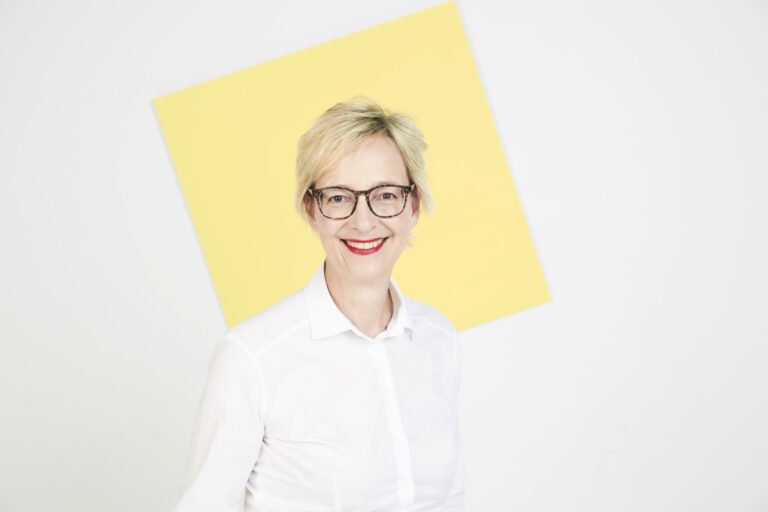
Christine Regitz
"There are many stereotypes surrounding computer science and it’s high time we put an end to them once and for all."

Your vision for ‘Women in STEM’
My hope is that one day it will no longer be anything out of the ordinary to be a woman in STEM – that it won’t even be worth mentioning, because it will be so normal for women to work in technical professions and to implement complex solutions within diverse teams.
To achieve this vision, we must ensure that children across Germany have equal access to STEM subjects – regardless of gender, place of residence, age or family background.

Statement on girls in the IT sector:
I am absolutely certain that without girls and women, the challenges currently facing the German IT sector can no longer be overcome. It has long been proven that diverse teams achieve better results and work more efficiently and creatively. Furthermore, the problems we face today are becoming increasingly complex: to tackle them holistically, we need many creative minds with different perspectives. Not to mention the shortage of skilled workers.
To achieve this vision, we must ensure that children across Germany have equal access to STEM subjects—regardless of gender, place of residence, age, or family background. Computer science skills, in particular, are essential for acting independently and responsibly in an increasingly digitally connected world and for helping to shape it. We must not deny this opportunity to anyone.
Did you have a clear idea of what your future would look like when you were a child?
Even as a child, I was never afraid of technology, and I was also lucky that those around me always encouraged me to take matters into my own hands. I hardly ever heard questions like, “Can you even do that?” That always encouraged me to pursue my interests. It wasn’t until I started working that I first became aware of the impact gender roles can have on my daily life and my career.
Which person(s) or experience(s) had the greatest influence on your decision about which career to pursue, and why?
When I was a little girl, I wanted to repair my bike myself. My grandfather was a craftsman and showed me how to do it. He was a key role model for me and never questioned whether such tasks were suitable for me as a girl.
Please tell us how your interest in your profession, academic field or trade was sparked.
Even at school, I chose maths and physics as my A-level subjects and wanted to study mathematics. At the careers advice centre, they told me that would lead me straight into a job in insurance. That was pretty much the least cool thing I could imagine at the time. So I studied business administration and physics, worked briefly as a consultant afterwards, and eventually ended up at SAP, where I’m still working today.
What do you like most about your current job?
Over the years, I have held various roles and worked in different areas of software development and management here and I was often the only woman, or one of very few, in the room. That’s why I began advocating for diversity and the advancement of women and girls at a very early stage. At SAP, I co-founded a women’s network in 2007 and have been Global Head of the ‘SAP Women In Tech’ team since 2020. Until 2016, I led the ‘Women and Computer Science’ specialist group at the German Informatics Society; today, I am President of the Society as a whole.
To this day, what I enjoy most in both my professional and voluntary roles is engaging with different people from the computer science community, exploring new areas of interest and challenging common prejudices.
These qualities have helped me along the way:
I believe that, as a computer scientist, it’s important to always keep an open mind: it’s not uncommon for us to have to adapt quickly to new developments.
That’s why I’m used to constantly questioning my own ideas and approaches and seeking feedback from others.
If you could give young women some advice, what would it be?
I would advise you to find your own approach: what interests, inspires or moves me? And what skills do I need to tackle this topic? The answers are often more surprising than you might think. And it’s not uncommon for this to open up completely different paths into the STEM sector.
You don’t necessarily have to study theoretical computer science to be considered a computer scientist. I didn’t do that either, and yet I am President of the German Informatics Society. There are, for example, many exciting so-called ‘hybrid’ subjects such as medical or environmental informatics and also many other ways to enter the tech industry and help shape it.
Further information
Gesellschaft für Informatik e. V. (Gi) | .Inf – Das Informatik-Magazin

Öffnungszeiten
Bitte beachten Sie unsere aktuellen Hinweise.
Kontakt
Tel. 069 / 713 79 69-0
Das Telefon ist von Mo. – Fr. zwischen 10:00 Uhr und 12:00 Uhr besetzt.
Fax 069 / 713 79 69-190
info@experiminta.de