* 1988 | Austria

Field: Informatics

Doctor of Technical Sciences (Dr. techn.) 

My work:

Professor of Computer Science Education

Brief description of duties:

Professional development for teachers; training of future primary school teachers (Years 1–6) in media and computing; research and teaching in the fields of maker education, basic computing, game design, programming skills and AI pedagogy

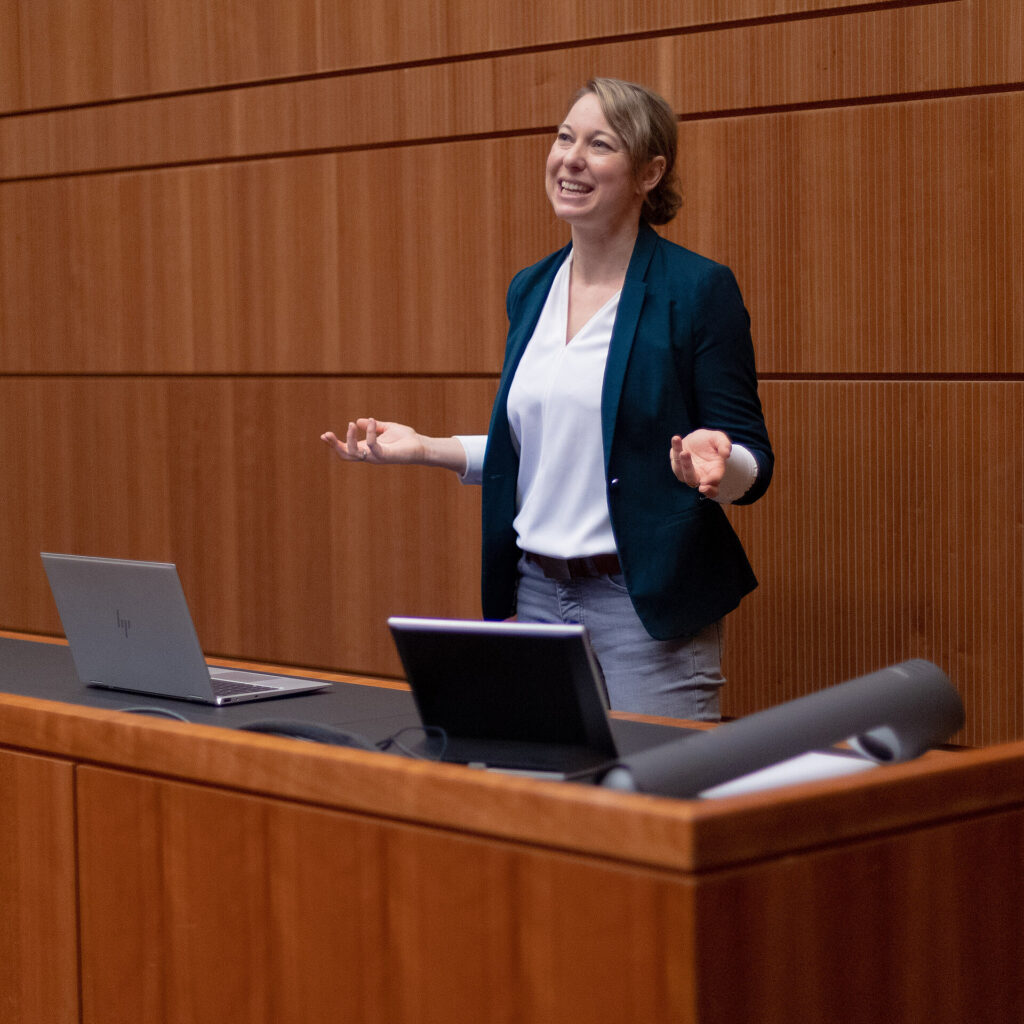
Bernadette Spieler

"Computer science offers fantastic opportunities for creativity and innovation. Find out more, be bold enough to embrace new technologies, and learn to work with them so that you can create something new and bring your ideas and visions to life."

Your vision for ‘Women in STEM’

My vision is that everyone should have the same opportunity to discover their passion for computer science and pursue it. That is why it is particularly important to get girls interested in computer science at an early age, regardless of whether they already receive support from their family or social circle.

Statement on early support for girls

Support schemes that focus on equal opportunities and breaking down stereotypes are effective in this regard. Furthermore, teachers play a vital role, as they can effectively help to spark the interest of both male and female pupils. Providing them with engaging and motivating teaching materials is therefore crucial to inspiring the next generation to take an interest in computer science. Furthermore, the creative aspect of computer science should be highlighted to demonstrate the diversity of the field and appeal to a broader spectrum of talent. In this way, a culture can be created that not only encourages young women to bring their ideas to life using digital tools, but also equips them with the necessary skills to do so.


During my studies, mentors in particular (unfortunately, female mentors were the exception) played a crucial role in enabling me to discover exciting areas of computer science and delve deeper into them. Such support structures are indispensable, as they not only impart knowledge and skills but also boost the confidence needed to hold one’s own in a male-dominated environment.

As a child, I didn’t have just one vision for my future, but many different ideas. For a long time, for example, I saw myself as a teacher or nursery teacher, which fitted in with my desire to share knowledge and inspire others. Later on, I wanted to become a journalist. However, my enthusiasm for writing and creative pursuits eventually led me into computer science and research, though rather by chance, thanks to a careers advisor who gave me the crucial tip.


However, I developed a positive attitude towards computers at an early age, as I attended a laptop class and learnt to solve problems on my own. I created my own websites and taught myself to code. The focus wasn’t on the coding itself, but on the fact that it helped me bring my ideas to life. This openness towards technology and the support of my inspiring IT teacher laid the foundations for my future career path.


I initially studied Information Management at the Joanneum University of Applied Sciences and subsequently completed a PhD in Software Development at Graz University of Technology. During my studies, I specialised in therapeutic and educational games for children and the associated research. This interest led to my doctoral thesis on ‘Game Design in an Educational Context’, with the aim of inspiring girls in particular through play.


These experiences show that even a path that seems unclear at first can lead to a major goal with a clear vision (in my case: helping/supporting children) if you let yourself be guided by curiosity and passion.

The advice I received early on from my computer science teacher – to solve problems independently rather than expecting ready-made solutions, was particularly influential. At the start of my degree, I needed to master certain fundamentals, such as programming. This required perseverance and a high tolerance for frustration. The projects we were then able to undertake in the later semesters gave me the freedom to put my own ideas into practice and be creative.

Equally indispensable was the support of my parents, who always believed in me and encouraged me in all my goals. This combination of personal encouragement and academic challenge shaped me and encouraged me to go into teaching and research myself.

Computer science allows you to develop your own ideas, put them into practice creatively, and make use of a wide range of technologies in the process. It was these versatile aspects and possibilities in particular that sparked my interest in computer science. The ability to solve problems whilst creating something new really appealed to me.


I am convinced that computer science is not just a technical discipline, but also a creative tool with which we can actively shape the world. My aim is to share this perspective and, above all, to inspire young women to discover their own creativity through computer science.

As a Professor of Computer Science Education at the Zurich University of Teacher Education, my work is varied and ranges from teaching and research to the professional development of teachers. I particularly value the opportunity to use engaging methods such as maker education and game design to enrich learners’ learning processes and to promote open-ended and motivating learning. These methods not only support practical and inquiry-based learning, but also foster problem-solving skills. Furthermore, securing projects and research funding is an essential part of my work, enabling me to constantly explore and develop new approaches to computer science education.


My work is extremely varied and no two days are the same, which makes the role particularly exciting and diverse.

EXPERIMINTA