- News
- Visit
- Column 2
- Opening hours outside of Hessian school holidaysMon-Fri 9.30am - 2pm, Sat,Sun 10.30am - 5.30pmOpening hours during the Hessian school holidaysDaily 10:30am - 5:30pm
- Activities
- Exhibitions
- Group
- EXPERIMINTA
- English
- News
- Visit
- Column 2
- Opening hours outside of Hessian school holidaysMon-Fri 9.30am - 2pm, Sat,Sun 10.30am - 5.30pmOpening hours during the Hessian school holidaysDaily 10:30am - 5:30pm
- Activities
- Exhibitions
- Group
- EXPERIMINTA
- English
- News
- Visit
- Column 2
- Opening hours outside of Hessian school holidaysMon-Fri 9.30am - 2pm, Sat,Sun 10.30am - 5.30pmOpening hours during the Hessian school holidaysDaily 10:30am - 5:30pm
- Activities
- Exhibitions
- Group
- EXPERIMINTA
- English
* 1984 | Germany
Field: Technology
Ph.D. in Materials Science
My job:
Research engineer at an industrial company
Brief job description:
Industrial research in the field of materials science, materials and failure analysis of technical components, problem solving / quality management
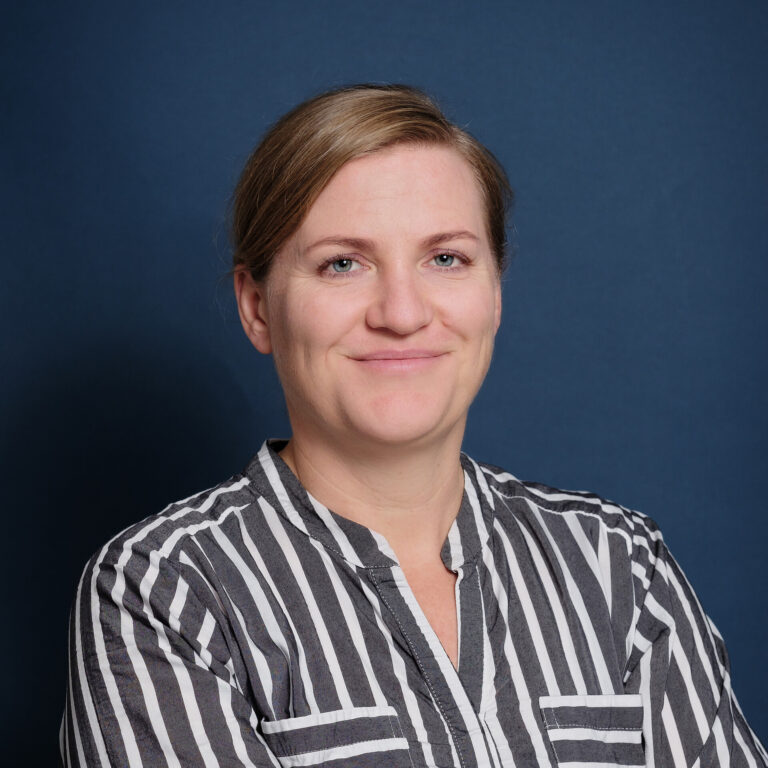
Anne Fuchs
"Role models are extremely important. From role models, you learn how to handle different situations, and at the same time, you learn the impact this has on other people. Don't let that discourage you!"
Her vision for “Women in STEM”
Don’t let that discourage you! And remember: role models are extremely important. From role models, you learn how to handle different situations, and at the same time, you learn how that affects other people. Find role models for yourself, and be a role model for others!

Did you have a clear idea of what your future would look like when you were a child?
No, not really. For a long time, I didn’t have a clear idea of what I wanted to do for a living. I was interested in a lot of things, and fortunately, many of them came easily to me. My life could have turned out very differently.
Which person(s) or experience(s) had the greatest influence on your decision about what career to pursue, and why?
First and foremost, my family environment played a key role in sparking my interest in scientific and mathematical concepts and research, and in giving me access to them. In addition to a curiosity about the unknown and an interest in nature, I was also taught that meaningful work is a cornerstone of a fulfilling life.
But certain mentors at school and during my studies also repeatedly encouraged me later on to pursue my path in STEM. Above all, the trust they placed in my abilities helped me to stay the course even when I had my own doubts.
Please tell us how your interest in your profession, field of study, or trade was sparked.
What attracted me to my field of study, materials science, was its interdisciplinary nature and the promise inherent in its name: to gain fundamental knowledge about the materials that surround us everywhere, that are part of our daily lives, and that make our lives easier.
What do you like most about your current job?
The detective work! I currently work in materials and failure analysis. Here, we use scientific findings to identify the causes of specific behavior—or even malfunctions—in technical components or materials.
These qualities have helped me along the way:
My professional skills require systematic and analytical thinking, as well as the ability to think abstractly. But communication with the people around me and empathy are just as important. You can’t accomplish much on your own. It’s working together with others that gets things moving.
If you could give young women some advice, what would it be?
Look for topics that truly inspire you. Get to know your strengths by asking others about them, and build on those strengths. Seek out work environments where you feel comfortable and where you are valued as a person.
Enjoying your work is the be-all and end-all.
Contact information:

Öffnungszeiten
Bitte beachten Sie unsere aktuellen Hinweise.
Kontakt
Tel. 069 / 713 79 69-0
Das Telefon ist von Mo. – Fr. zwischen 10:00 Uhr und 12:00 Uhr besetzt.
Fax 069 / 713 79 69-190
info@experiminta.de