*1968 | Germany
Field: | Natural Sciences | Technology
Undergraduate and doctoral studies: Economics (while pursuing her doctorate: already working as a political consultant)
My Work:
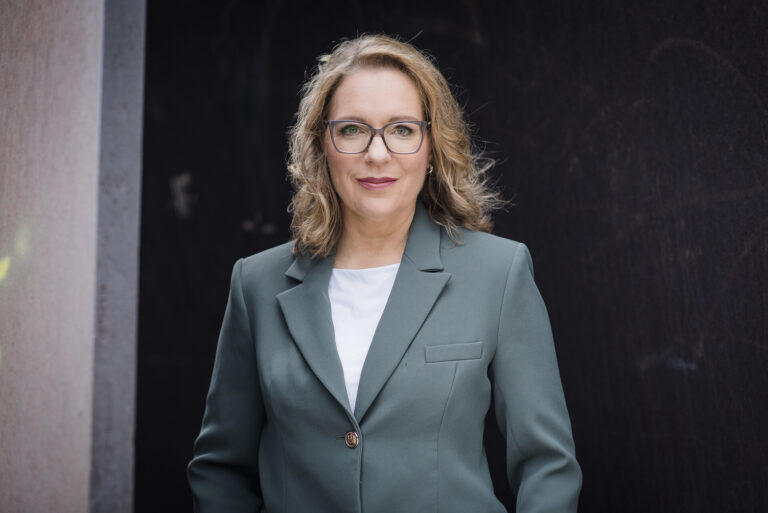
Head of the “Energy, Transport, and Environment” Department (German Institute for Economic Research) • Professor of Energy Economics and Energy Policy at Leuphana University • Co-Chair of the German Federal Government’s Advisory Council on the Environment • Member of the Executive Board of the German Society of the Club of Rome • Member of the Executive Board of the Scientists for Future initiative
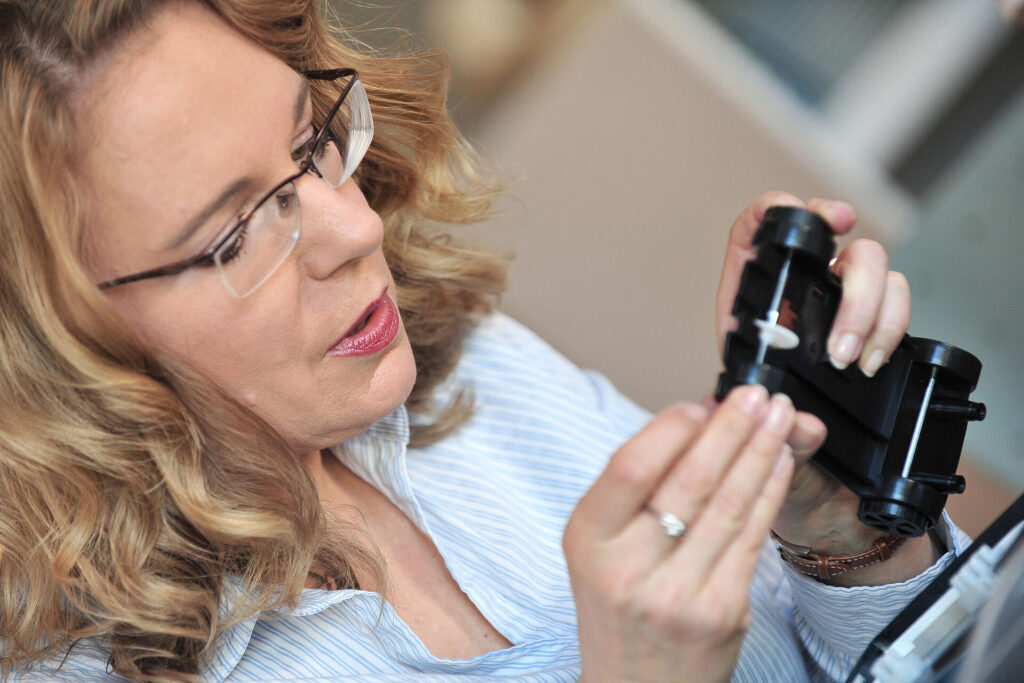
Research into the economic impacts of the transformation of the energy, transportation, and building sectors toward greater use of renewable energy, electric mobility, and hydrogen. We produce research reports, studies, and academic publications. These are also discussed in the context of policy advisory work, such as within the German Council of Economic Experts. Working with my wonderful colleagues is a lot of fun. And I have a podcast on MDR where I explain scientific findings to a broad audience, and I’ve been doing that for 2.5 years now. It never gets tedious; on the contrary.
The STEM field isn’t for women!? Of course it is! We should think of names like Ada Lovelace, Emmy Noether, Grace Hopper, Margaret Hamilton, Marie Curie, Hedy Lamarr, Ellen Ochoa, and Katherine Johnson. There are also outstanding women in the field of economics with a strong focus on STEM subjects: First and foremost are the two Nobel laureates Elinor Ostrom and her research on the commons, as well as Esther Duflo and her experimental approaches to poverty reduction. Also groundbreaking were and remain the pioneer in feminist economics Barbara Bergmann, the economic historian Claudia Goldin and her research on the gender pay gap, economist Mariana Mazzucato and her work on the role of the state in the economy, economist Dambisa Moyo and her work on microfinance, and political economist Joan Robinson, who debunked the myth that “the market will sort it out.” There are also many female economists in politics: for example, labor market economist and current U.S. Treasury Secretary Janet Yellen, ECB President Christine Lagarde, World Bank Chief Economist Carmen Reinhart, and former IMF Deputy Managing Director Anne Krueger.
Women like her have had a profound impact on the field of economics through their research, teaching, and policy contributions, but more importantly, their questions and ideas have inspired and transformed public discourse. Women are not only half of humanity; they are also half of the future. With our STEM knowledge, we can help solve the challenges of our time, such as climate and environmental issues, sustainable productivity, and global justice. We should encourage one another in this endeavor! STEM rocks!
No, not at all. I originally wanted to become a doctor, which is why I earned the advanced Latin certificate in high school. From childhood on, I did a lot of research on animals and plants. To this day, my family still laughs fondly about how patiently I used to count the spots on ladybugs’ wings as a child. Even as a child, I was very curious and had a sort of urge to explore. Everyone in the family thought I would become an ornithologist. Behavioral research was and still is my passion.
Studying economic markets, including market power, is quite similar to biological behavioral research. I never imagined that I would be studying the effects of climate protection and the energy transition today. But I really enjoy it. I have the great privilege of being able to do what I enjoy most for a living.
As Confucius once said: “Find a job you love, and you’ll never have to work a day in your life.”
The freedom and opportunities for personal growth I enjoyed as a child were helpful in getting me started, but it wasn’t until college that I met people who played a decisive role in shaping my path. The renowned U.S. economist Alan Manne, whose hobby of horseback riding happened to bring him to a horse farm in a neighboring village in my hometown, invited me to Stanford University, where I conducted in-depth research into mathematical modeling of energy and climate markets. I was able to study the energy transition toward renewable energy in depth as part of one of the first-degree programs in renewable energy at the University of Oldenburg. Very early in my career, I had the opportunity to work with environmental and climate researchers on numerous major research projects, such as with the future Nobel laureate Klaus Hasselmann.
This led to the development of an ever-expanding network of countless colleagues in the scientific community. I owe it to SPD politician and Federal Minister Edelgard Bulmahn, who reformed the German higher education system, that I was able to take up the very first junior professorship in Germany in 2002, as a woman and at the relatively young age of 32. CDU politician Klaus Töpfer, Federal Minister for the Environment, Nature Conservation, and Nuclear Safety in Helmut Kohl’s government, who also worked as a university professor, encouraged me to bring scientific insights into politics. The SPD politician Herman Scheer inspired me to continue exploring the phase-out of fossil fuels. I could list countless more names that have influenced my career path, not all of them as prominent, but immeasurably important to me and my life.
I wanted to understand the world, even beyond Germany’s borders. During my studies, I encountered climate and energy economics, which was a niche field over 30 years ago. I began my studies in 1988, and the first climate report (the IPCC Assessment Report) was published in 1990. I immediately realized that I wanted to be part of the research into how human-induced climate change can be halted and how the energy transition toward a fully renewable energy supply can be enabled and implemented. I was fascinated very early on by its existential importance: Energy is the lifeblood of an economy; we cannot live without it! Oil, gas, nuclear, and renewable energy – what sounded boring to many back then is now one of the most important issues of our time. The costs and benefits of the energy transition have become my life’s work.
Unfortunately, we have not succeeded in sufficiently halting climate change. The reasons for this are clear, as the market power of the fossil fuel business model can and has successfully prevented change. Even though this has been known for over 40 years, scientific findings must continue to be researched and communicated to the general public.
I learn something new every day. Economics combines knowledge from various disciplines such as mathematics, engineering, statistics, sociology, and political science. What I enjoy most is the research work I do with my team, with whom I explore numerous topics and studies related to the energy, transportation, and building transitions. I support and mentor young female researchers and am active in numerous mentoring networks. In addition, I have just been appointed to my third term on the German Advisory Council on the Environment. Working with my wonderful colleagues is a lot of fun. And I host a podcast on MDR, where I explain scientific findings to a broad audience, and have been doing so for 2.5 years now. It never gets boring—quite the opposite.
A love of learning, because asking questions and challenging assumptions—that is the very essence of science. This passion drives me, day after day.
Team spirit, because science is always a team effort. Major research projects rely on global collaborations. I enjoy this, and I’m happy for others’ successes as well.
Resilience, because doubt and conflict are an essential part of science. In addition to technical issues, there is also a lot of struggle over money and power. Things can get pretty rough. Fortunately, I find it easy to handle that.
Build a network of people you can truly trust, both professionally and personally, as early as possible. Friendships are invaluable not only in your personal life but also in the academic world.
More about Claudia and Contact
Bitte beachten Sie unsere aktuellen Hinweise.
Tel. 069 / 713 79 69-0
Das Telefon ist von Mo. – Fr. zwischen 10:00 Uhr und 12:00 Uhr besetzt.
Fax 069 / 713 79 69-190
info@experiminta.de
|
Uploaded
Failed
|
![]() |