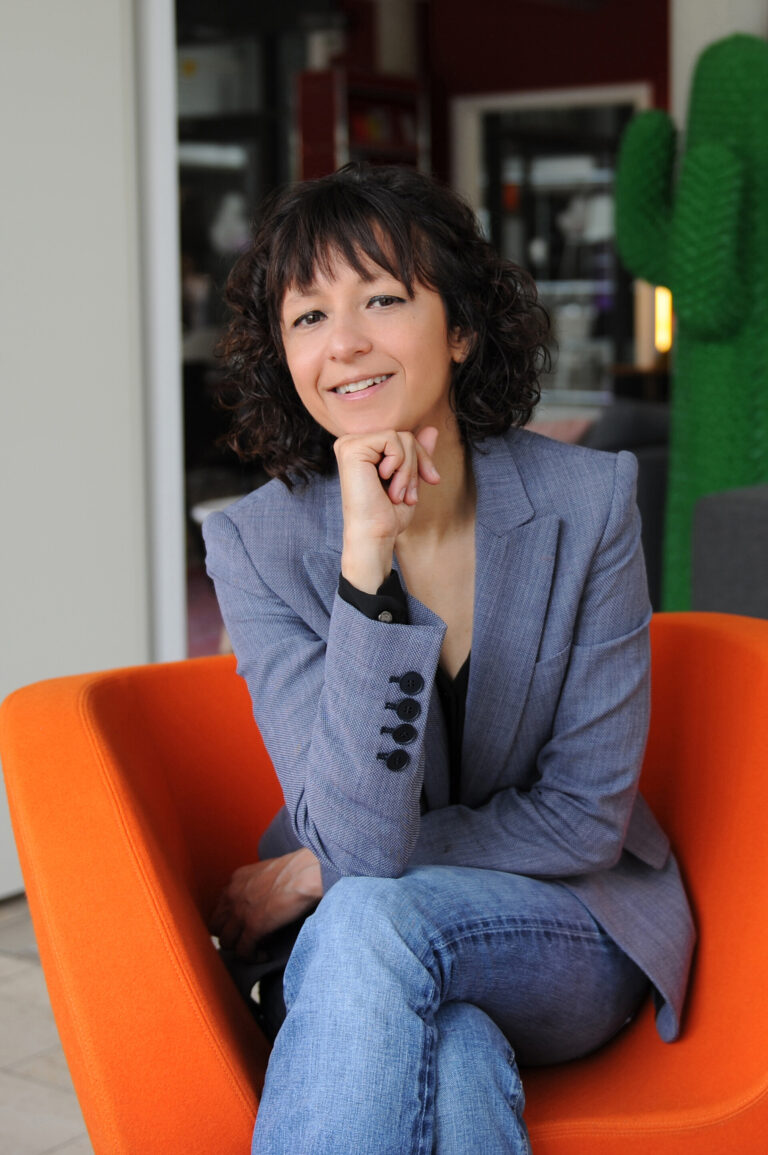
*1968 | France
Field: Natural Sciences
Ph.D. (Microbiology)
My Work:
Executive Director of the Max Planck Institute for the Science of Pathogens
Brief job description:
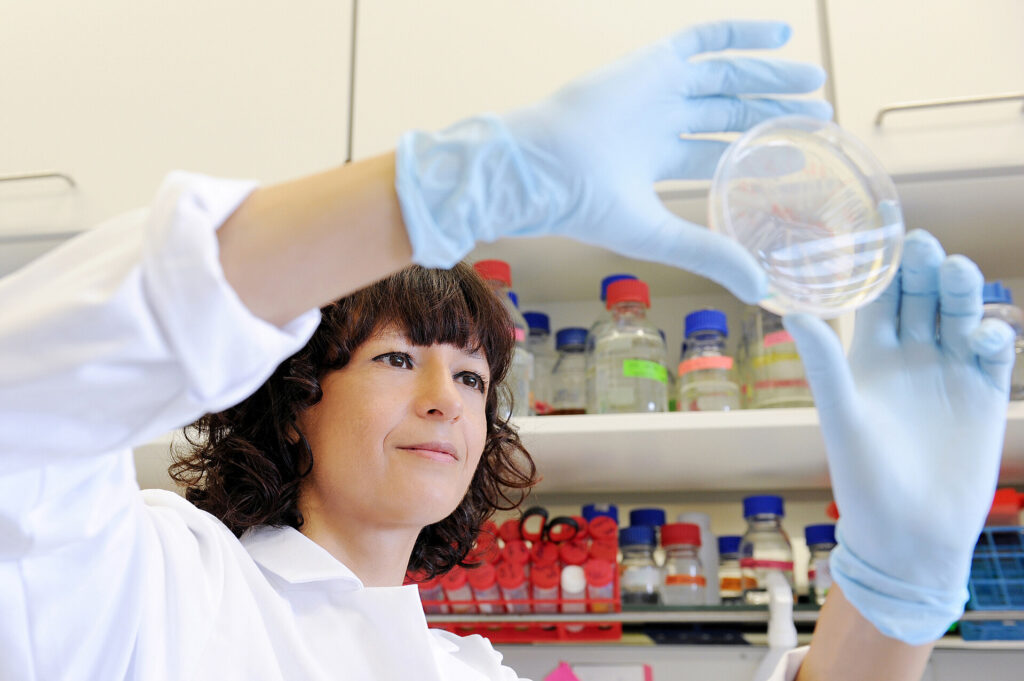
Her responsibilities include administrative duties, laboratory work, research, and personnel coordination; training early-career researchers; organizing scientific events and conferences; conducting evaluations; and coordinating with other institutes.
My vision is for everyone to recognize how important and essential gender diversity is, anda that the progress of science and our society depends not only on other qualifications but, above all, on the quality of work and interpersonal skills
As a child, I loved all sciences (both the humanities and the natural sciences). As a teenager, I wanted to become a detective (most likely because of the opportunity to solve mysteries, riddles, and puzzles—which is what research is all about), I wanted to become a nun (most likely because of the long hours of solitude and concentration that research would offer), and I also had the goal of curing the world of all diseases (which is possible with the discovery of CRISPR-Cas9, albeit only for a limited number of diseases)!
My path led me to microbiology and later to the Nobel Prize for the discovery of CRISPR, and I feel that my vision, if not fully, then at least partially, has come true.
My parents had a big influence on me. They were very active and dedicated to their careers and various creative pursuits. They were also very active in social and other movements.
They never tried to steer me in a particular direction and never told me I couldn’t do something. My father was a gardener, responsible for a city’s parks and gardens, and he loved explaining plants and their origins to me and teaching me their Latin names, which sparked my creativity and my interest in research and nature.
My mother was a trained seamstress and head nurse at a psychiatric clinic, which sparked my creativity and my interest in research and medicine. In addition, as a child I took classical ballet and piano lessons, and the endless hours of practice and rehearsal prepared me well for my life as a researcher so far.
When I was still in elementary school, I watched my older sister go to college and talk passionately about her experiences. That sparked a desire in me to continue my studies, and my goal was to go to college as soon as possible. Ever since I was 11 years old, my mother had told me that one day I would work at the Pasteur Institute in Paris. I felt particularly drawn to the rationalism of the natural sciences, but also to the humanities.
In 1986, I enrolled at Pierre and Marie Curie University in Paris, where I studied biochemistry, microbiology, and genetics. During my studies, I completed summer internships at various biological research laboratories (CNRS, industry) and at a Parisian hospital. Thanks to these experiences, I decided that I really wanted to work in a laboratory, and during my first master’s program, I developed a strong interest in microbiology. I visited several labs at the Pasteur Institute to see which area I might work in and chose the one focused on bacterial antibiotic resistance (the frequent staphylococcal infections I had in my youth may have influenced my decision!).
What I like most about my current job is that I have the opportunity to interact with younger students and researchers and witness their enthusiasm for basic research, in the hope of helping them develop a passion for it.
Curiosity, creativity, a desire to learn, grow, and advance, hard work, a passion for working both independently and as part of a team, generosity, determination, discipline, perseverance, courage, and resilience.
If you want to study science, don’t hesitate! The training you’ll receive at the university and in the labs as part of your research education will be very useful in whatever career path you choose in the future whether directly in the scientific field or in science-related professions.
If you are a female scientist at a stage in your career where you want to take on a leadership role, you should do so without overthinking it. If you are committed, willing, and hardworking, doors will always be open to you.
Bitte beachten Sie unsere aktuellen Hinweise.
Tel. 069 / 713 79 69-0
Das Telefon ist von Mo. – Fr. zwischen 10:00 Uhr und 12:00 Uhr besetzt.
Fax 069 / 713 79 69-190
info@experiminta.de
|
Uploaded
Failed
|
![]() |