- News
- Visit
- Column 2
- Opening hours outside of Hessian school holidaysMon-Fri 9.30am - 2pm, Sat,Sun 10.30am - 5.30pmOpening hours during the Hessian school holidaysDaily 10:30am - 5:30pm
- Activities
- Exhibitions
- Group
- EXPERIMINTA
- English
- News
- Visit
- Column 2
- Opening hours outside of Hessian school holidaysMon-Fri 9.30am - 2pm, Sat,Sun 10.30am - 5.30pmOpening hours during the Hessian school holidaysDaily 10:30am - 5:30pm
- Activities
- Exhibitions
- Group
- EXPERIMINTA
- English
- News
- Visit
- Column 2
- Opening hours outside of Hessian school holidaysMon-Fri 9.30am - 2pm, Sat,Sun 10.30am - 5.30pmOpening hours during the Hessian school holidaysDaily 10:30am - 5:30pm
- Activities
- Exhibitions
- Group
- EXPERIMINTA
- English
* 1989 | Germany
Field: Natural Sciences
Bachelor’s degree in Physics (Free University of Berlin)
Master’s degree in Physics (Martin Luther University Halle-Saale)
Ph.D. in Physics (University of Oxford)
My Work:
Head of Research Group at the University of Freiburg and the Fraunhofer Institute for Solar Energy Systems (ISE)
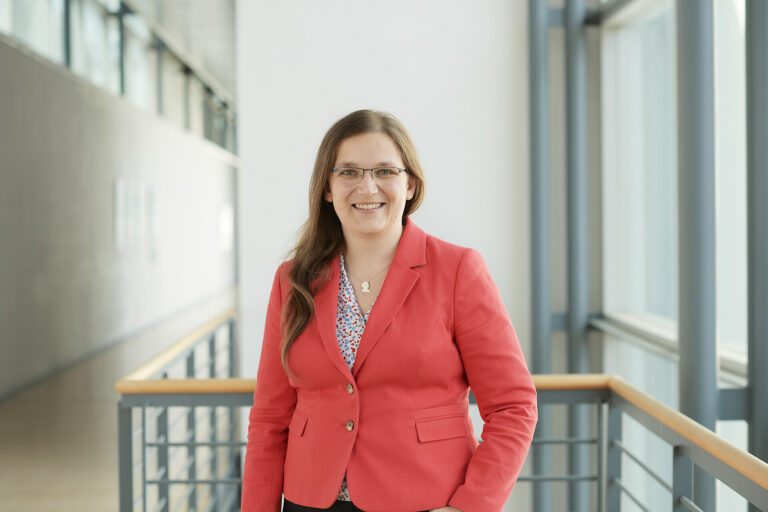
Juliane Borchert
"In 1926, Lise Meitner became the first female professor of physics in Germany. She had to endure a great deal of discrimination before she could take on this role. When she arrived in Berlin in 1907, women were still barred from studying at the university, and she had to enter the buildings through back doors.
Today, a hundred years later, the situation is different. Women can study at all universities in Germany, and there are numerous female physics professors.
Nevertheless, hurdles remain for women in STEM fields.
From negative gender stereotypes and the unequal distribution of care work to sometimes hostile work environments, there are many challenges that make it difficult for women to pursue their interests in STEM subjects and reach their full potential.
My vision: The STEM sector as a place where women naturally belong, where their contributions are recognized and celebrated, and where they can research, develop, invent, design, and work free from discrimination."

Her vision for “Women in STEM”
The STEM sector as a place where women are naturally included, where their contributions are recognized and celebrated, and where they can conduct research, develop, invent, design, and work free from discrimination.

Did you have a clear idea of what your future would look like when you were a child? How did that evolve? Did your vision come true?
As a child, I was interested in nature and very curious about how things work and why they work. That’s why I found science classes exciting in school and even participated in the Math Olympiad. However, I didn’t have a clear idea of what that might mean for my future. Events like the Long Night of Science and Girls’ Day helped me get my first glimpse into various fields.
Which person(s) or experience(s) had the greatest influence on your decision about what career to pursue, and why?
By the end of high school, I was very undecided about which major to pursue after graduation. Forestry, chemistry, and physics were all options. My local university offered a weekend course on choosing a major, which was a great help to me. After extensive discussions about my strengths, weaknesses, and interests, I finally decided on physics.
Please tell us how your interest in your profession, field of study, or trade was sparked.
During my physics studies, there was a period when I stopped enjoying my coursework. I couldn’t really see the point anymore. During the long summer break, I took a course to become a solar installer. I really enjoyed it, and I found the topic of renewable energy incredibly motivating. Finally, something where I could see the positive impact on society. I brought that motivation back with me to my physics studies and specialized in the physics of solar cells. Today, I lead a research group that is exploring new materials for the solar cells of the future.
What do you like most about your current job?
I enjoy the variety of my work. One moment I’m reading scientific articles, the next I’m discussing in the lab how best to repair a machine, and shortly after that I’m talking with industry partners about how our research can be practically applied in future products. It’s always exciting, and I get to work with many different people from various fields and countries.
These qualities have helped me along the way:
Openness and curiosity have always helped me adapt to change. Not only have they helped me understand unexpected experimental results, but they’ve also allowed me to quickly build strong working relationships in new places and with new people.
If you could give young women some advice, what would it be?
My advice is to stay flexible. It’s great to be able to try out different things to figure out which topics and ways of working you enjoy the most. Sometimes unexpected opportunities come up, and flexibility helps you seize them quickly.
Contact information:

Öffnungszeiten
Bitte beachten Sie unsere aktuellen Hinweise.
Kontakt
Tel. 069 / 713 79 69-0
Das Telefon ist von Mo. – Fr. zwischen 10:00 Uhr und 12:00 Uhr besetzt.
Fax 069 / 713 79 69-190
info@experiminta.de