- News
- Visit
- Column 2
- Opening hours outside of Hessian school holidaysMon-Fri 9.30am - 2pm, Sat,Sun 10.30am - 5.30pmOpening hours during the Hessian school holidaysDaily 10:30am - 5:30pm
- Activities
- Exhibitions
- Group
- EXPERIMINTA
- English
- News
- Visit
- Column 2
- Opening hours outside of Hessian school holidaysMon-Fri 9.30am - 2pm, Sat,Sun 10.30am - 5.30pmOpening hours during the Hessian school holidaysDaily 10:30am - 5:30pm
- Activities
- Exhibitions
- Group
- EXPERIMINTA
- English
- News
- Visit
- Column 2
- Opening hours outside of Hessian school holidaysMon-Fri 9.30am - 2pm, Sat,Sun 10.30am - 5.30pmOpening hours during the Hessian school holidaysDaily 10:30am - 5:30pm
- Activities
- Exhibitions
- Group
- EXPERIMINTA
- English
*1999 | Germany
Field: Technology
B.Eng. in Industrial Engineering – Electric Mobility,
M.Sc. in Energy Science and Technology
My Work:
SBB Cargo, Strategic Asset Management (Evaluation and Design of a Field Trial for Battery-Powered Shunting Locomotives)
Brief job description:
Data analysis, measurement campaigns, technology evaluations, development of technical industry standards, design of test and application scenarios for new technologies, feasibility studies, techno-economic analyses
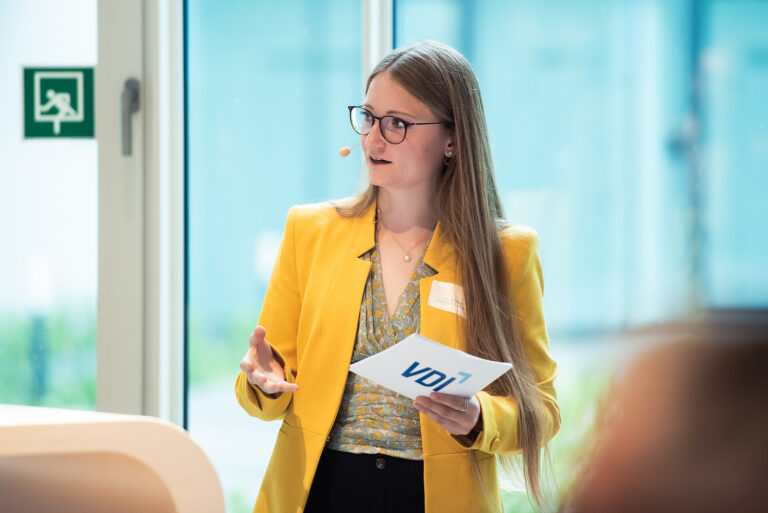
Fenja Feitsch
Companies and institutions must recognize that diversity in teams—whether in terms of gender, culture, or background—is revolutionizing the way we solve problems and strengthening our technological future.
“STEM shouldn’t need special roles—diversity in technology must become the norm.”
I dream of a world where initiatives to promote women in STEM are unnecessary because it’s a given that people of all genders are equally represented.
“Self-confidence unlocks potential—we can learn from ‘the men’ in this regard.”
The biggest advantage men often have? A healthy confidence in themselves and their abilities. Women should cultivate this strength as well.
“Shaping technology—changing the world.”
It’s not job titles that attract me, but the opportunity to make a tangible contribution to the environment and society through technology.
“Shaping technology—changing the world.”
Networks, mentors, and support programs have been crucial on my journey—they open up new perspectives.
“Change begins in the mind—and in the classroom.”
Teachers who believed in my potential and schools that gave me opportunities like early college enrollment were key to my entry into the tech field.

Her vision for “Women in STEM”
I hope for a world in which companies and institutions not only recognize that gender diversity drives technological superiority and innovation, but also actively promote all forms of diversity. To me, it is clear that reflecting the diversity of our society in STEM fields not only creates fairer and more inclusive workplaces, but also fundamentally transforms collaboration, well-being, and our approach to technical challenges.
My hope is that one day we will no longer need special initiatives to inspire women to pursue STEM careers, because it will have become the norm for people of all gender identities to be represented in these fields.

Did you have a clear idea of what your future would look like when you were a child?
Yes and no. As a child, I had many different ideas about what my future might look like, and they were constantly changing. Today I know: It wasn’t (and isn’t) specific job titles that fascinate me, but rather fields of work where I can make a real impact and that align with my values and beliefs, areas that are meaningful to me and bring about positive change.
Even as a child, climate change was a major concern for me. Starting in 9th or 10th grade, I developed a strong desire to take active steps to address these challenges. At that point, I began studying politics early on, hoping to later influence key issues in the political arena.
At the same time, a teacher strongly encouraged me to pursue the sciences. Her persistent support and my participation in a MINT-EC camp led to a paradigm shift in my perspective. There, I experienced the direct impact of technology and realized that I could also contribute to the fight against climate change through this path.
One girl in particular left a lasting impression on me; she had already joined the camp with a keen interest in technology. She was the first person my age in my circle who clearly stated that she wanted to pursue a technical career after graduating from high school. Her determination and passion made a lasting impression on me, especially the matter-of-fact way she said it, completely free from the constraints of typical gender roles.
During the camp, I noticed that there were absolutely no differences in how girls and boys were treated. This equal treatment among us was surprising, since technology was often seen as something “for boys” in my circle of friends.
A lightbulb moment: Maybe a career in a technical field? Why not!
Which person(s) or experience(s) had the greatest influence on your decision about what career to pursue, and why?
The person who had the greatest influence on my decision to pursue a technical degree was undoubtedly my 10th-grade chemistry teacher. Up until that point, I had viewed the sciences, including chemistry, merely as a necessary evil for the Abitur. Recognizing my analytical and mathematical abilities, she persistently encouraged me to participate in a wide range of STEM activities. Her persuasiveness was particularly crucial when she worked with my parents to ensure that I attended a multi-day science and technology camp organized by the MINT-EC association. This camp and the subsequent ones first showed me how immediate and tangible technology is and opened my eyes to the impact of technology on climate change.
My parents also played a significant role in my development, though on a more general level and indirectly. From my earliest childhood, they encouraged me (and my brother) to make independent decisions and to embark on new, unknown paths with optimism. Their unconditional trust in my abilities gave me the self-confidence and self-assurance to find and pursue my own path without letting myself be guided by perceived limitations or doubts.
From my experiences, I have learned just how formative the influence of the people in my immediate environment has been on my decisions and my career. Especially during the sensitive developmental phase of my life, I keenly observed the examples set by my parents, teachers, and other role models. Their encouragement and support were crucial in strengthening my self-confidence and showing me unconventional paths.
Please tell us how your interest in your profession, field of study, or craft was sparked.
My interest in my professional field stems from a combination of personal experiences, inspiring role models, and a desire to engage in meaningful work. Although I never had a specific career goal in mind, I was captivated from an early age by the intersection of technology, people, and the environment. The intersection of sustainable energy and mobility has been a recurring theme throughout my career:
This led me to a dual degree program in Industrial Engineering with a focus on automotive electromobility, where I worked on fuel cell technologies for heavy-duty trucks, a key area for reducing greenhouse gas emissions.
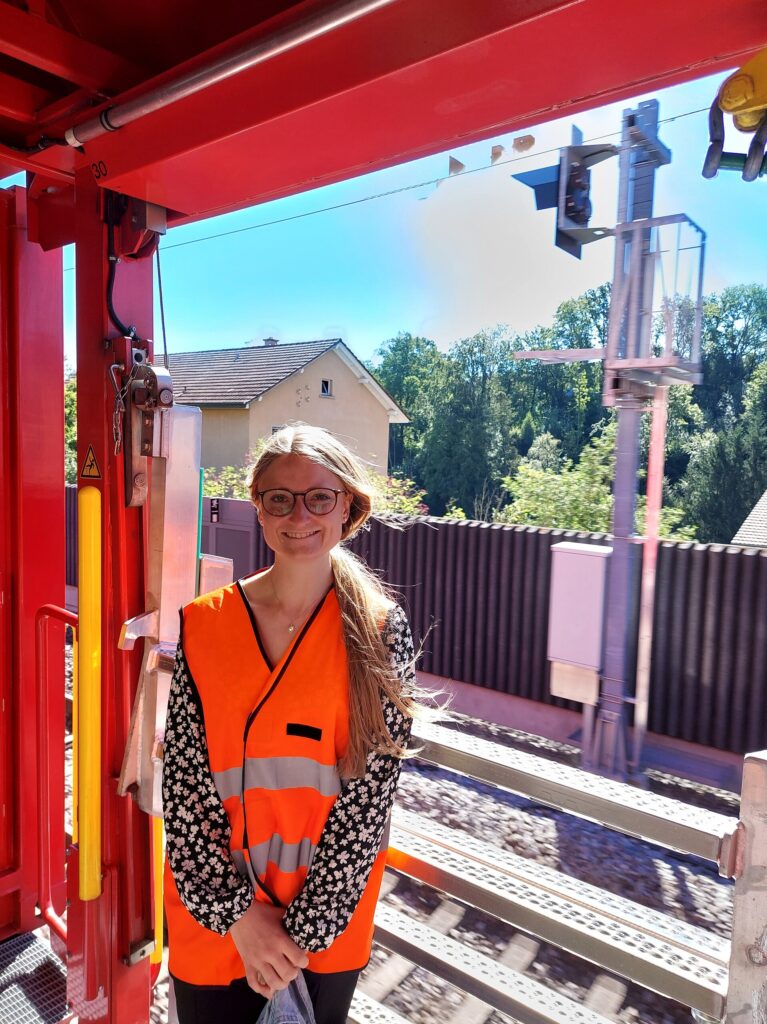
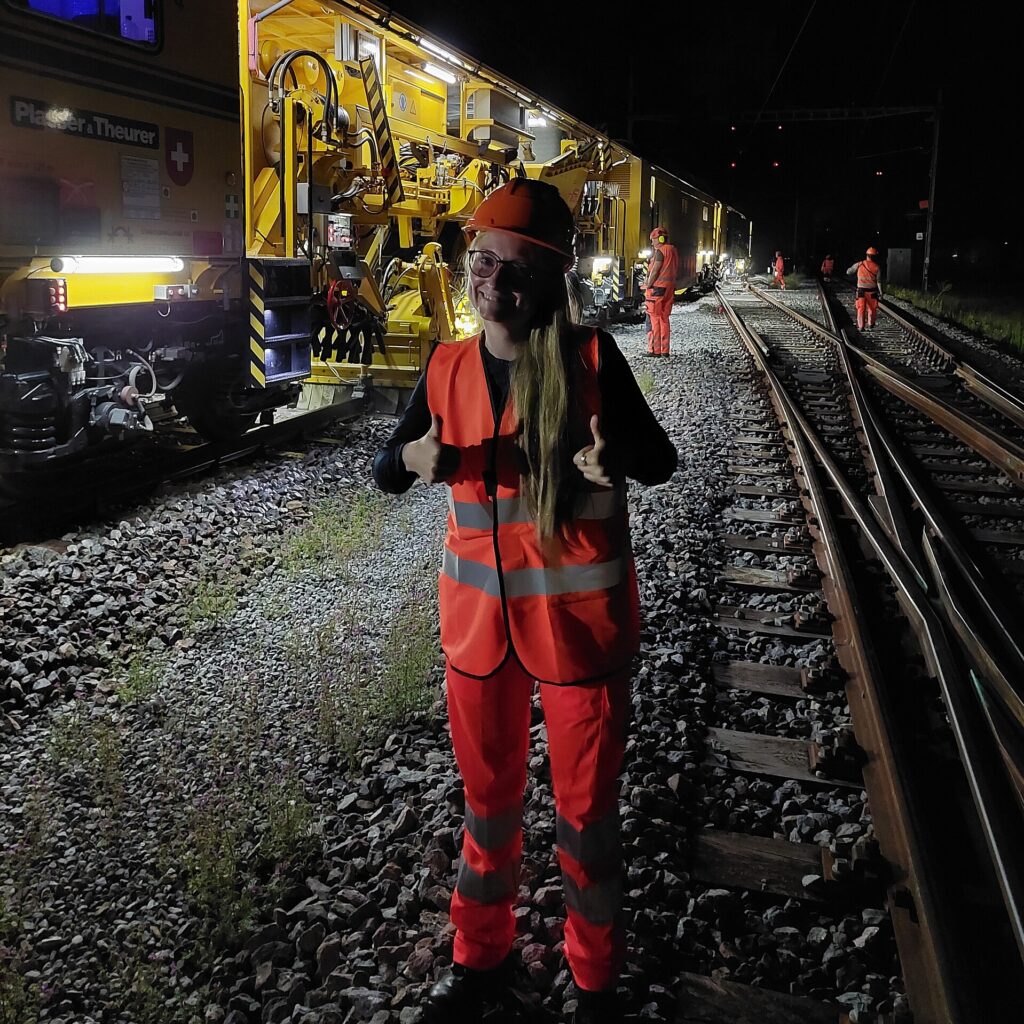
My interest deepened during my master’s program in Energy Science and Technology at ETH Zurich. At the same time, I worked at Swiss Federal Railways (SBB) first as an intern, then part-time, and finally on my master’s thesis. Here, I am tackling the challenge of replacing diesel locomotives with zero-emission battery-powered locomotives.
What do you like most about your current job?
In my current role, I delve deeply into the technical details to fully understand specific requirements and potential solutions. But I never get bogged down in the details, I regularly step back to critically assess the entire system.
This requirement to switch between micro and macro perspectives allows me not only to develop “mindless” technical solutions, but also to think strategically and question whether, for example, our operations will meet the future needs of our customers and the demands of the industry.
Time and again, the question arises as to what level of perspective changes and innovations require, and what dependencies and consequences might be associated with them.
What makes my work particularly appealing is the exciting combination of technical detail and strategic foresight, which creates a complex and dynamic challenge. Furthermore, I know that as pioneers, our solutions make a significant contribution to reducing global greenhouse gas emissions. This certainty gives me a strong sense of self-efficacy—day after day.
These qualities have helped me along the way:
Passion. Self-confidence. Curiosity.
I see my technical understanding as a valuable tool, one that empowers me to actively shape the world around me. For me, technology is not an end in itself, but a means to an end. The decision of how and for what purpose this tool is used lies in my hands.
My passion drives me. It stems from my deep conviction that technology must always serve the well-being of people and nature. This conviction carried me through my studies and helped me keep the big picture in mind—the opportunity (and responsibility) to use technology in a meaningful and sustainable way.
My self-confidence allows me to apply technology with conviction. I know that I can inspire and convince others with my expertise because I am confident and clear in its application.
My curiosity keeps me from becoming too rigidly fixed on a single direction. It allows me to remain open to new ideas and approaches, ensuring that my technical knowledge remains versatile and broad. In this way, I prevent technology from becoming a one-dimensional tool and ensure that it remains adaptable and forward-looking.
If you could give young women some advice, what would it be?
Men usually have an edge over women in just one area: a healthy confidence in themselves and their own abilities.

Öffnungszeiten
Bitte beachten Sie unsere aktuellen Hinweise.
Kontakt
Tel. 069 / 713 79 69-0
Das Telefon ist von Mo. – Fr. zwischen 10:00 Uhr und 12:00 Uhr besetzt.
Fax 069 / 713 79 69-190
info@experiminta.de